Key Takeaways
- Stem cell therapy for sports injuries is often explored for meniscus tears that have not responded well to rest, physio, or PRP alone.
- A 2026 phase III trial found that stem cells paired with meniscus repair surgery led to sustained improvements in knee function over two years.
- Stem cells do not fully regrow a torn meniscus, but research suggests they may support healing and reduce inflammation around the tear.
- Mesenchymal stem cells, bone marrow aspirate concentrate, and platelet rich plasma each play a different role in joint injury treatment.
- Always get an MRI-confirmed diagnosis and talk to a specialist before choosing between surgery and stem cell options.
Estimated read: 9 min
Meniscus tears and other sports injuries do not always heal cleanly on their own. This is why stem cell therapy for sports injuries comes up so often in these conversations. In this guide, we cover how it works, what recent research shows, and how it compares with surgery and PRP.
Why People Consider Stem Cell Therapy for Sports Injuries
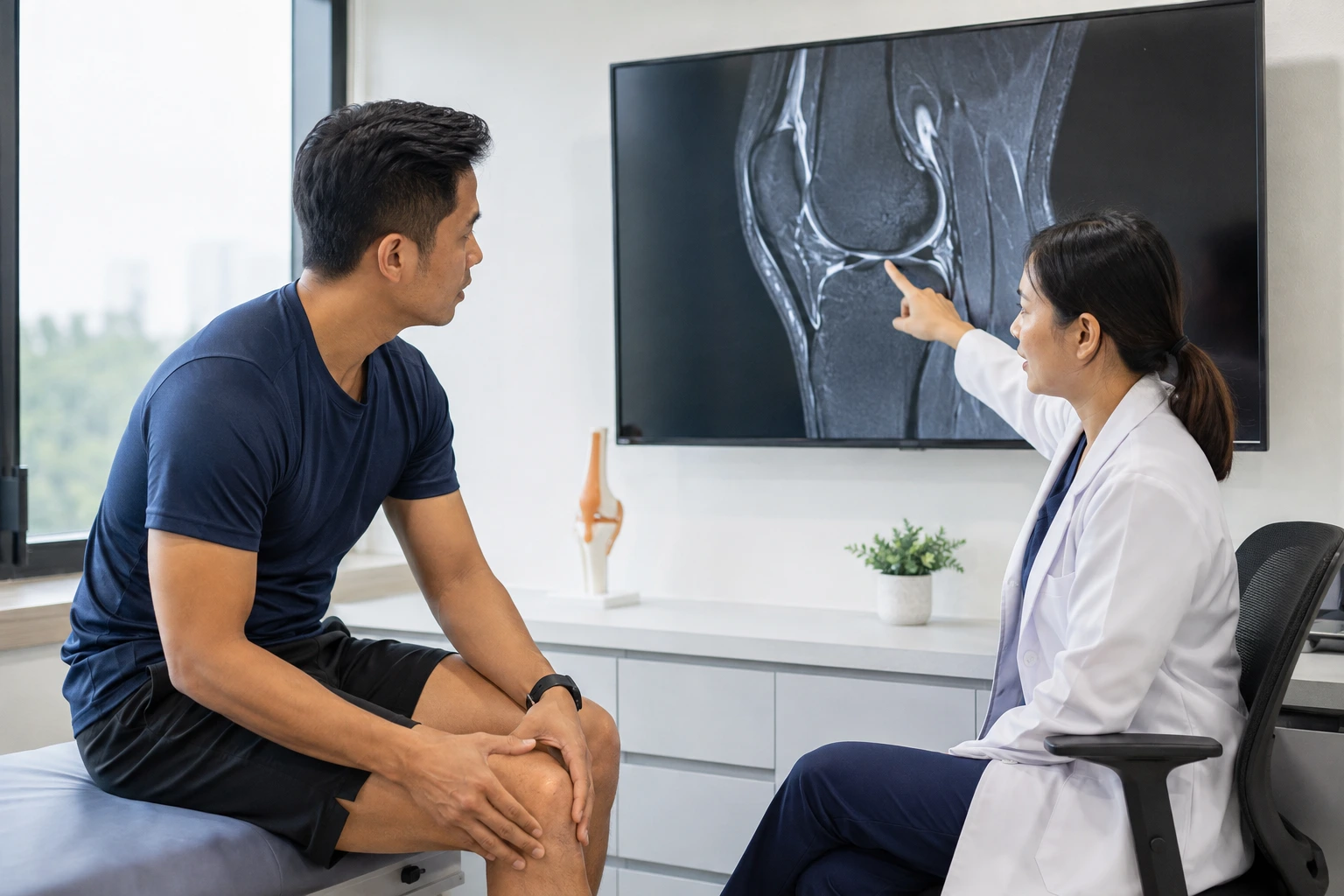
A torn meniscus is one of the most common knee injuries in active people. It can happen during sport, or it can build up gradually from years of wear on the knee joint.
Recovery is not always straightforward, and meniscal tears range widely in how well they heal on their own. Rest, physio, and bracing provide meaningful relief for many people. Others still have pain, swelling, or an unstable knee months later.
This is often when stem cell therapy for sports injuries comes up in the conversation. It usually comes up alongside surgery, not instead of it.
We typically discuss our stem cell injections for joint injuries program at this stage. This program also sits within the wider field of regenerative medicine, once patients have already tried simpler options.
What Is a Meniscus Tear and Why It Is Hard to Heal
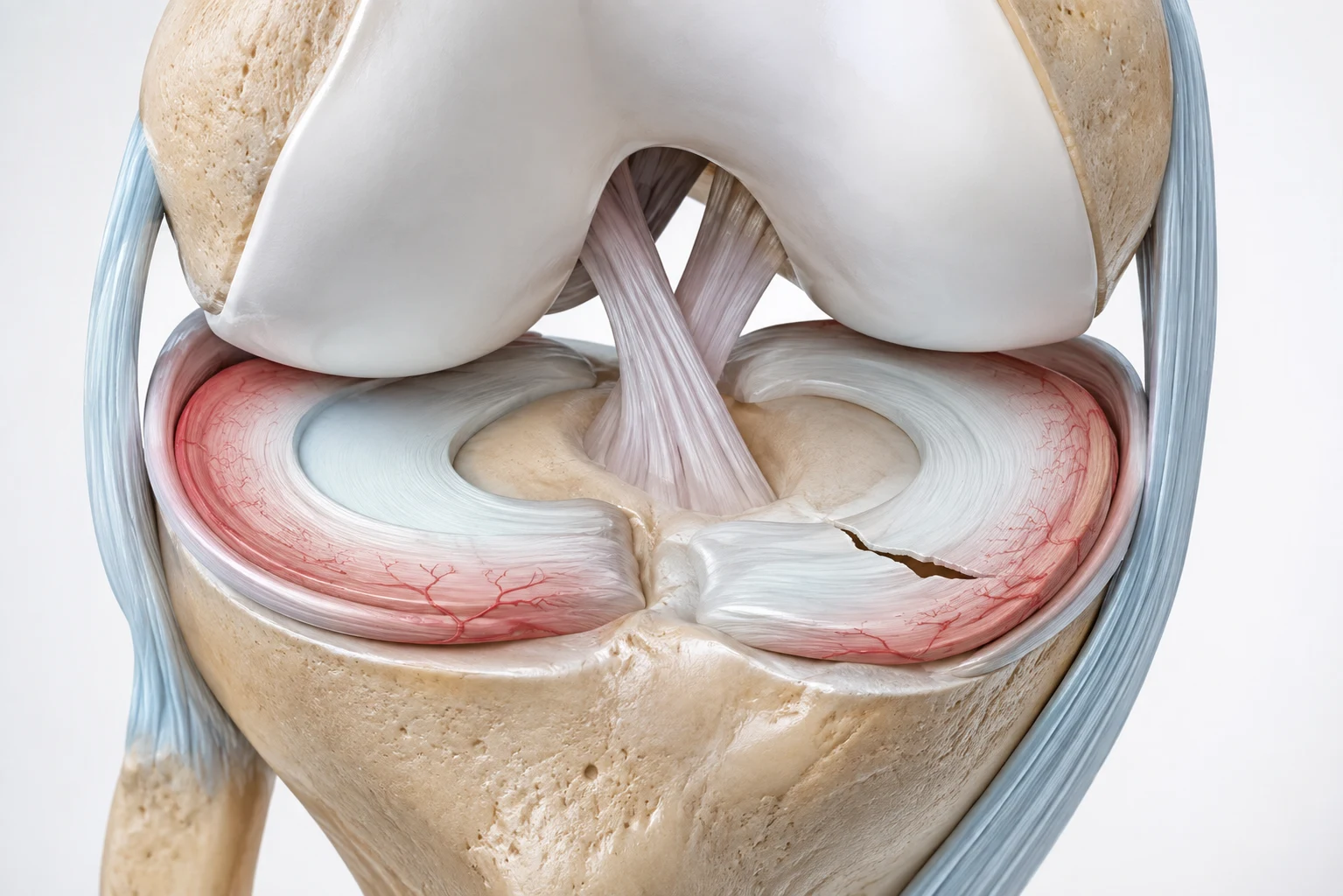
The meniscus is a curved piece of cartilage that cushions the knee. A meniscus injury can happen suddenly, from a twist or impact. It can also develop gradually, from repeated stress over time.
Blood supply is part of the problem. However, only the outer edge of the meniscus gets good blood flow. The inner two-thirds does not, so an injured meniscus in that zone struggles to heal on its own.
This is a key reason a torn meniscus often needs outside help to heal well. That help can mean surgery, biologic treatment, or both together.

Common Meniscus Tear Patterns
- Longitudinal tears, which run along the length of the meniscus
- Radial tears, which cut across the meniscus like a slice
- Flap tears, where a loose piece can catch inside the joint
- Degenerative tears, which build up gradually with age and wear
Signs a Tear May Need More Than Rest
- Locking or catching sensations when bending or straightening the knee
- Swelling that returns after activity, even weeks later
- Pain along the joint line that limits squatting or twisting
- A feeling that the knee might give way under load
How Stem Cell Therapy Works for Joint Injuries
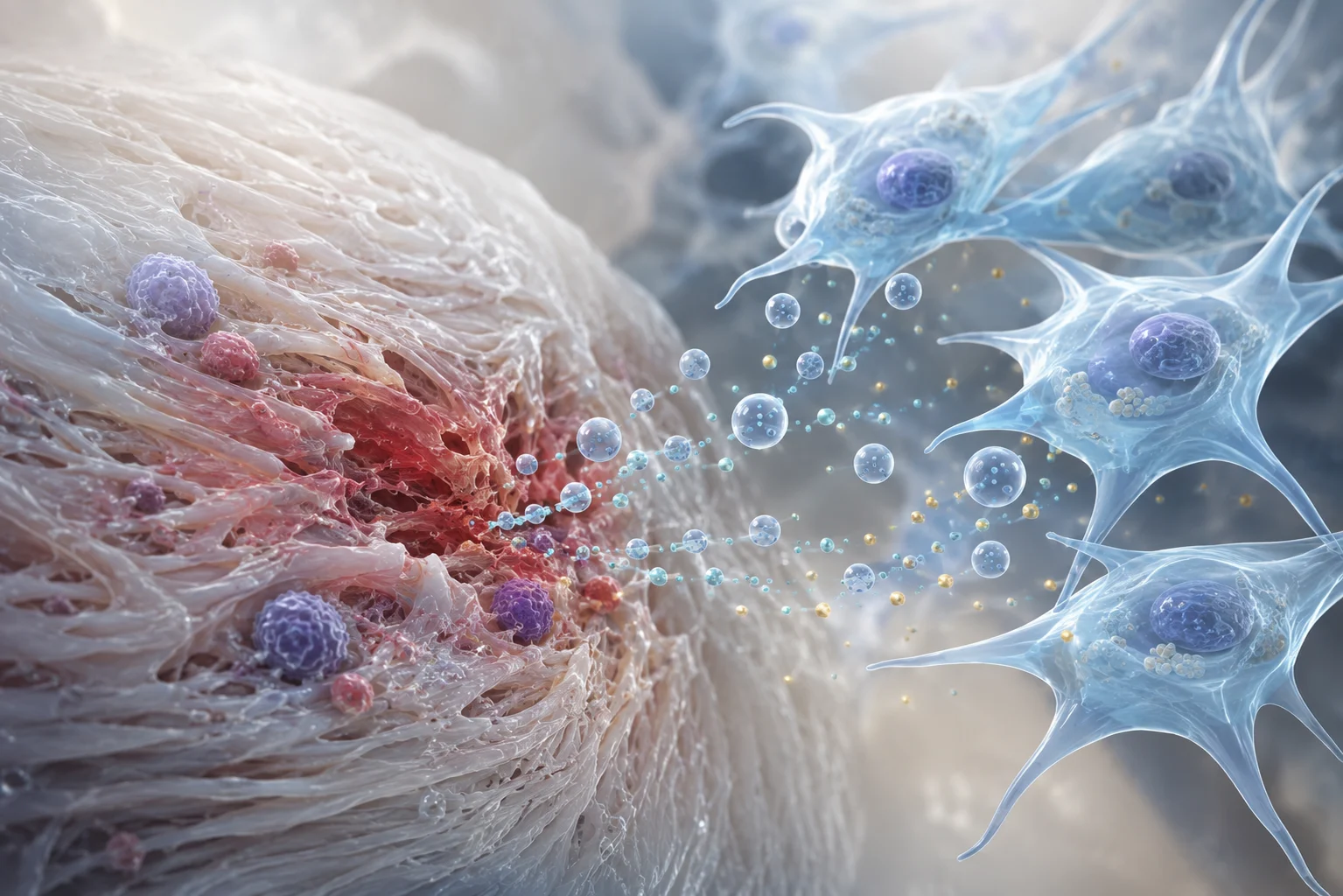
Several stem cell therapies are used in orthopedic care. The most common are mesenchymal stem cells (MSCs).
Doctors often also deliver these through a stem cell injection. Another option is bone marrow aspirate concentrate, obtained from the patient’s own bone marrow.
These cells release growth factors. This may help calm inflammation and support tissue regeneration around the injury. They do not rebuild the meniscus from scratch, though.
Instead, they may improve the local environment where healing needs to happen. Platelet rich plasma (PRP), however, works differently. It concentrates platelets from a patient’s own blood.
This delivers a short burst of growth factors. Living cells, by contrast, can keep signaling over a longer period.
Where These Approaches Are Used
- Meniscus tears, alongside or after repair surgery
- Knee joint injuries more broadly, including cartilage wear
- Some anterior cruciate ligament injuries, as a supportive option
- Tendon and ligament injuries elsewhere in the body
Factors That Influence Which Cell Type Is Used
- How much tissue damage is present and where it is located
- Whether a same-day, in-clinic option is preferred over a lab-processed one
- The patient’s age and general healing capacity
- Whether the treatment is paired with surgery or used on its own
Stem Cell Therapy vs PRP vs Surgery
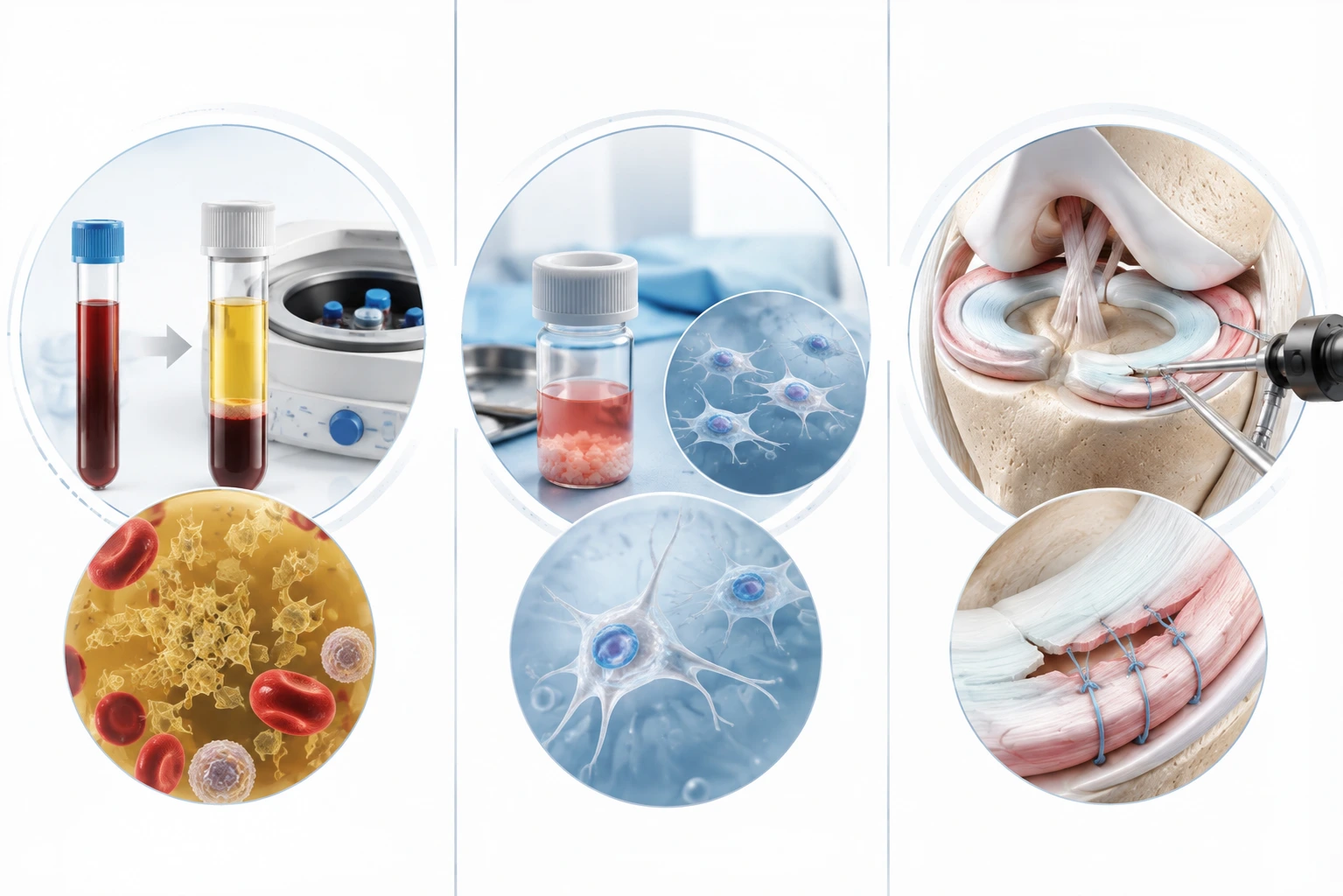
None of these three options is automatically the right choice for stem cell therapy for sports injuries. Each fits a different clinical situation. Many patients end up using more than one option over time.
| Option | What It Involves | Typically Considered For |
|---|---|---|
| PRP | Concentrated platelets from your own blood | Mild to moderate injuries, earlier intervention |
| Stem cell therapy | MSCs or bone marrow aspirate concentrate | Persistent pain, injuries that have not responded to simpler care |
| Arthroscopic surgery | Minimally invasive procedure to repair or trim the tear | Mechanical symptoms like locking, or tears unlikely to heal alone |
Still, arthroscopic surgery remains the standard for many types of tears. This is especially true when a piece of meniscus catches inside the joint. Doctors increasingly use stem cell therapy alongside surgery, not only as an alternative to it.

What the Research Shows
A 2026 phase III multicenter trial studied patients with meniscal flap tears that were repaired with sutures. Researchers then added a synovial mesenchymal stem cell transplant at the repair site.
At one year, knee function scores improved well beyond the study’s own success threshold. In addition, arthroscopic follow-up showed improvement in most patients. MRI findings confirmed the same pattern.
These improvements remained stable through the two-year follow-up. Researchers reported no treatment-related safety concerns during that time. This is a meaningful signal, since many earlier studies only tracked shorter timeframes.
A separate systematic review examined mesenchymal stem cells (MSCs) more broadly for human meniscus healing. It found generally positive safety signals across the available studies.
However, it also noted that research in this area is still developing. Researchers still need larger, more consistent trials before they can draw firm conclusions.
What This Research Does and Does Not Show
- Supports stem cells as an add-on to meniscus repair, not a replacement for it in this trial design
- Shows sustained results at two years, longer than many earlier studies tracked
- Does not yet prove stem cells alone can fully replace surgical repair in every case
- Comes from a relatively small, specific patient group, so results may not generalize to everyone.

Recovery and Realistic Expectations
Recovery timelines vary by tear type, treatment choice, and overall joint health. Combining stem cells with surgery does not necessarily shorten recovery time. Instead, it aims to improve the quality of healing over the long term.
What Recovery Often Involves
- An initial period of protected weight-bearing and limited activity
- A structured physiotherapy program to rebuild strength and range of motion
- Gradual return to sport or high-impact activity, guided by your surgeon
- Follow-up imaging to track how the repair is healing
Questions Worth Asking About Your Own Timeline
- When can I expect to walk without support after this procedure
- At what point can I return to light exercise, like swimming or cycling
- What signs would mean I should slow down or see my provider sooner
- How will follow-up imaging change my plan if healing is slower than expected
Meniscus regeneration is not instant. Most improvements described in research build over months, not weeks. Anyone considering treating meniscus damage this way should plan for a gradual process, not a quick fix.
Who Is a Good Candidate
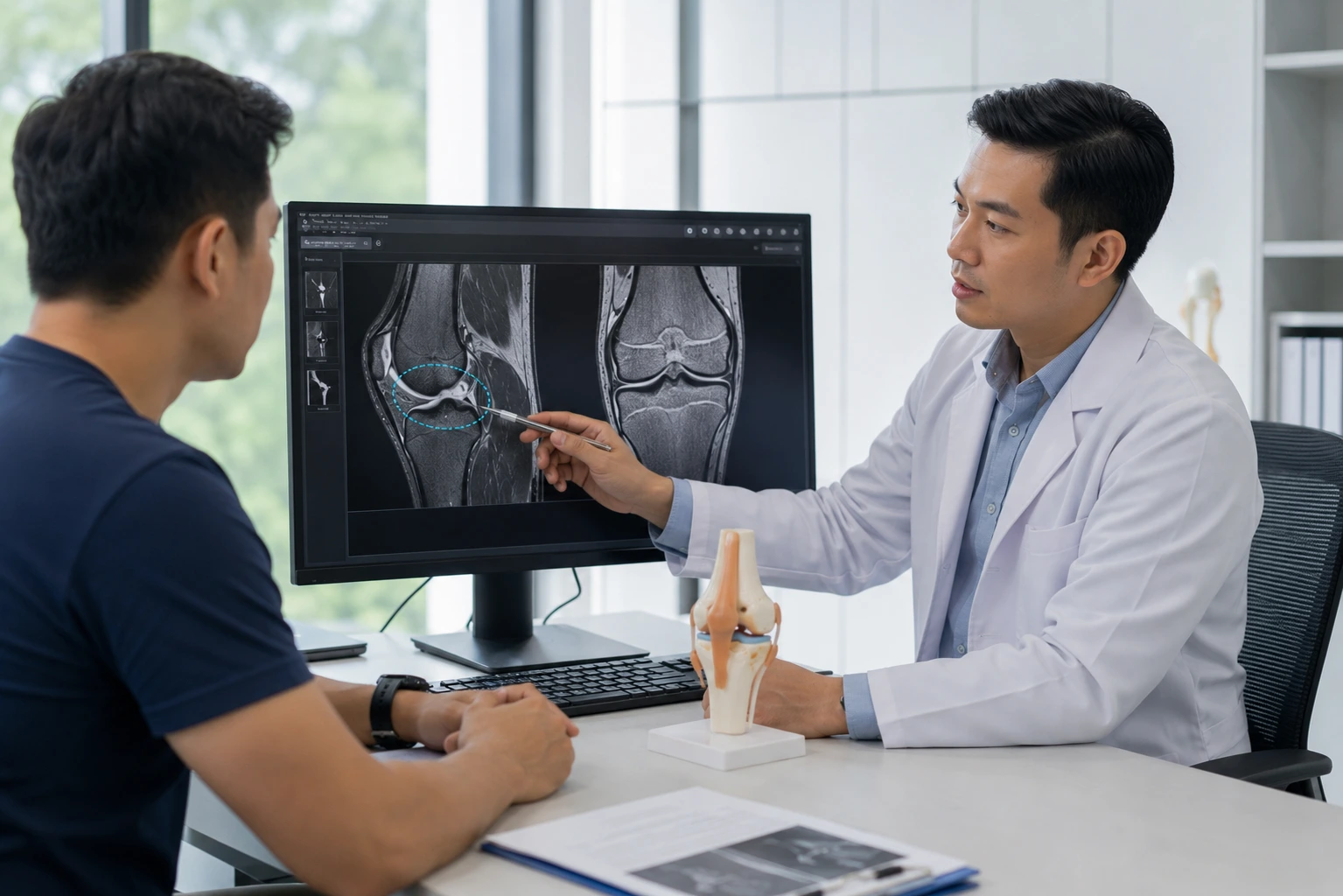
Good candidates typically have a clear, MRI-confirmed meniscal tear. They have also usually already tried simpler options, such as physiotherapy. Many good candidates also have a tear pattern suited to repair rather than removal.
Who May Need a Different Approach
- People with advanced arthritis affecting the whole knee, not just the meniscus
- Those with an active infection that needs to be resolved first
- Tear patterns that surgeons consider unsuitable for any repair
- Anyone without a confirmed diagnosis from recent imaging
People in these groups may need a different plan instead. This could still mean other stem cell treatments, a different surgical approach, or further diagnostic work first.
Our related article covers how mesenchymal stem cells support damaged joint tissues. It looks at this candidacy question for both broader joint wear and meniscus-specific injuries.
Age by itself rarely rules someone out. What matters more is the overall condition of the joint, not just the number of years on it. Cartilage loss across the whole joint can limit options at any age.
Safety and What a Consultation Should Cover
Still, stem cell therapy is generally described as minimally invasive. It still carries potential risks, though, including infection or a reaction at the injection site. These events appear uncommon in the research reviewed here.
Many patients arrive at this conversation after already trying PRP and physiotherapy for joint pain. That history is exactly what a good consultation should review before recommending next steps.
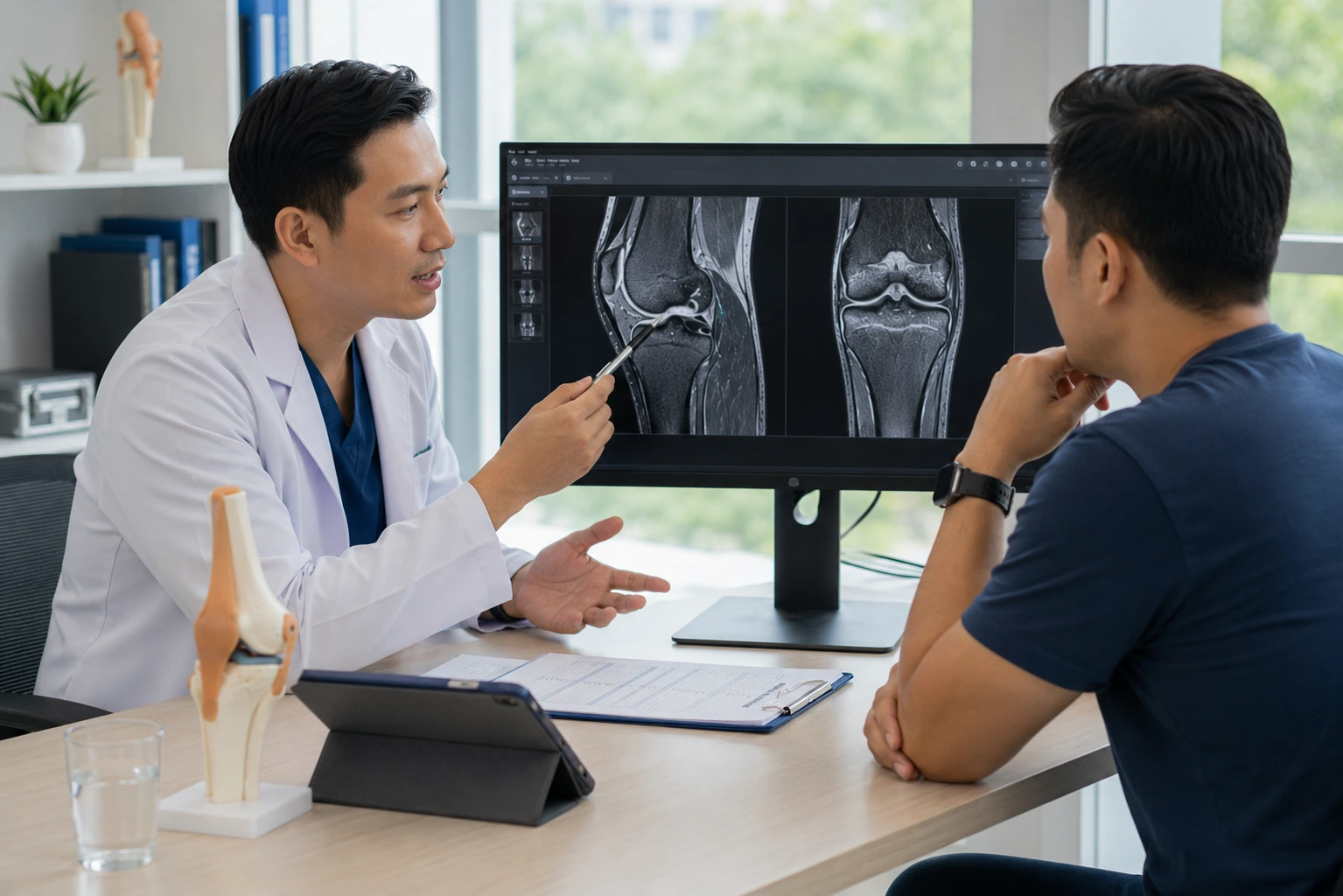
What Your Consultation Should Cover
- MRI or imaging confirming the exact tear pattern and location
- Your history with physio, PRP, or prior surgery
- Whether repair, removal, or a combined approach fits your case
- Realistic timelines for return to sport or normal activity
No provider can guarantee full regrowth of the meniscus. An honest consultation should make that clear, while still explaining what current research does and does not support.
Curious whether stem cell therapy for sports injuries could fit your situation? Start your application and our care team will review your imaging and history with you.
Frequently Asked Questions
Will stem cells heal a torn meniscus?
Stem cells alone do not fully heal a torn meniscus in every case. Research suggests they may support healing when combined with repair surgery, particularly for tears that already respond to stitching. Results vary by tear type and individual.
Can you recover 100% from a meniscus tear?
Many people also regain strong, functional knees after treatment. No provider, however, can guarantee a full return to pre-injury structure for every tear type. Recovery depends on the location of the tear, the treatment choice, and how closely you follow rehabilitation.
How much does stem cell therapy cost for a torn meniscus?
Costs vary by clinic, cell source, and whether you combine stem cells with surgery. A consultation is the most reliable way to get an accurate estimate. That consultation should include a full imaging review.
Can a torn meniscus regrow?
The meniscus has limited natural healing capacity. This is especially true in its inner zone, which lacks a strong blood supply of its own.
Research on stem cells and meniscus regeneration is encouraging but still developing. Full natural regrowth, however, is not something current treatment can promise.
Ready to Explore Stem Cell Therapy for Sports Injuries?
Call or WhatsApp us at +6018 222 0032. You can also email info@cyronacell.com to discuss your imaging and history with our team.